TAO (Therapy Assistance Online)
TAO (Therapy Assistance Online)
TAO (Therapy Assistance Online)
TAO Mobile App Redesign
TAO Mobile App Redesign
Role: UX Researcher & Designer
Project Duration: 4 weeks
Team Size: 3
Tools Used: Figma, Miro, Surveys, Affinity Mapping
Role: UX Researcher & Designer
Project Duration: 4 weeks
Team Size: 3
Tools Used: Figma, Miro, Surveys, Affinity Mapping
Overview
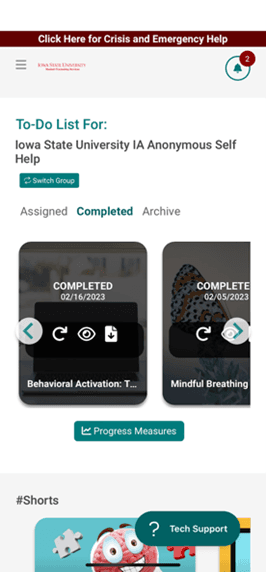
Imagine you’re a college student battling academic stress and personal struggles. You turn to a promising app, TAO, for mental health support, but the experience leaves you frustrated instead of comforted. The navigation is confusing, the design feels outdated, and completing simple tasks takes too much effort. Like many others, you abandon the app.
This was the reality for students at Iowa State University. The TAO app, a vital mental health resource, was falling short of its mission due to poor usability and design. Our team took on the challenge of transforming it into a tool that students could rely on for their well-being.
Overview
Imagine you’re a college student battling academic stress and personal struggles. You turn to a promising app, TAO, for mental health support, but the experience leaves you frustrated instead of comforted. The navigation is confusing, the design feels outdated, and completing simple tasks takes too much effort. Like many others, you abandon the app.
This was the reality for students at Iowa State University. The TAO app, a vital mental health resource, was falling short of its mission due to poor usability and design. Our team took on the challenge of transforming it into a tool that students could rely on for their well-being.
Problem Statement
Problem Statement
Users reported frustration navigating the app, leading to disengagement, especially given the critical role mental health resources play in students' well-being.
Users reported frustration navigating the app, leading to disengagement, especially given the critical role mental health resources play in students' well-being.
Context
Context
Context
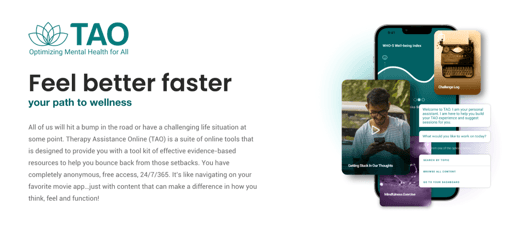
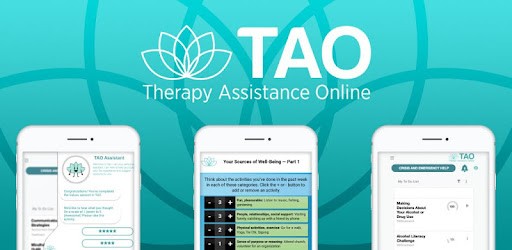
The TAO (Therapist Assisted Online) mobile app is a mental health tool provided by Iowa State University Student Counseling Services.
It offers resources such as educational modules, activity logs, mindfulness exercises, and crisis support. Designed as a self-guided app, it aims to support students' mental health and well-being. Despite its critical purpose, the app suffers from poor usability and engagement, prompting the need for a redesign.
The TAO (Therapist Assisted Online) mobile app is a mental health tool provided by Iowa State University Student Counseling Services.
It offers resources such as educational modules, activity logs, mindfulness exercises, and crisis support. Designed as a self-guided app, it aims to support students' mental health and well-being. Despite its critical purpose, the app suffers from poor usability and engagement, prompting the need for a redesign.
Approach
Approach
Approach
Our journey began with empathy and curiosity.
We conducted usability tests with 9 participants—students and therapists alike—to understand their struggles. Through think-aloud sessions, surveys, and interviews, we gathered their stories of frustration:
“I can’t find what I need quickly.”
“The app feels more like homework than a wellness tool.”
Armed with these insights, we mapped out pain points on an affinity diagram and identified key areas for improvement
Our journey began with empathy and curiosity.
We conducted usability tests with 9 participants—students and therapists alike—to understand their struggles. Through think-aloud sessions, surveys, and interviews, we gathered their stories of frustration:
“I can’t find what I need quickly.”
“The app feels more like homework than a wellness tool.”
Armed with these insights, we mapped out pain points on an affinity diagram and identified key areas for improvement
Identified Issues
Identified Issues
• Low Ratings:
• App Store: 1.9/5 (19 reviews)
• Google Play: 3.7/5 (17 reviews)
• Key Usability Concerns:
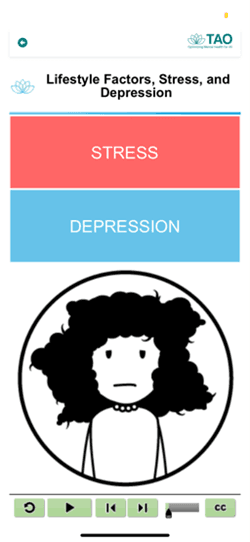
• Inconsistent themes and layouts.
• Poor visual hierarchy and resolution.
• Limited feedback mechanisms.
• Non-intuitive navigation, requiring excessive scrolling and clicks.
• Mental Health App Usability Research:
• Common issues include glitches, lack of clear instructions, and poor UI.
• Low Ratings:
• App Store: 1.9/5 (19 reviews)
• Google Play: 3.7/5 (17 reviews)
• Key Usability Concerns:
• Inconsistent themes and layouts.
• Poor visual hierarchy and resolution.
• Limited feedback mechanisms.
• Non-intuitive navigation, requiring excessive scrolling and clicks.
• Mental Health App Usability Research:
• Common issues include glitches, lack of clear instructions, and poor UI.
Objectives
Objectives
• Improve the app's UI/UX to enhance accessibility and usability.
Align design with user-centered principles to increase engagement and retention.
Address functional and aesthetic deficiencies highlighted by user feedback and usability testing.
• Improve the app's UI/UX to enhance accessibility and usability.
Align design with user-centered principles to increase engagement and retention.
Address functional and aesthetic deficiencies highlighted by user feedback and usability testing.
Design Inspiration
Design Inspiration

Methodology
Methodology
Usability Testing:
Conducted tests with 9 participants (students and therapists, ages 21–50).
Tasks analyzed included adding courses, viewing earned badges, accessing crisis help, and exploring mindfulness content.
Data Collection:
Think-aloud sessions recorded interactions.
Surveys, including the System Usability Scale (SUS), provided quantitative insights.
Affinity diagrams captured user pain points, likes, and needs.
Prototyping and Redesign:
Created low- to high-fidelity prototypes based on findings.
Iterative design improvements addressed navigation, visual hierarchy, and interactive elements.
Evaluation:
Time to complete tasks reduced by up to 74%.
Errors decreased across tasks in the redesigned app.
Participants rated the redesign higher for usability and aesthetics.
Usability Testing:
Conducted tests with 9 participants (students and therapists, ages 21–50).
Tasks analyzed included adding courses, viewing earned badges, accessing crisis help, and exploring mindfulness content.
Data Collection:
Think-aloud sessions recorded interactions.
Surveys, including the System Usability Scale (SUS), provided quantitative insights.
Affinity diagrams captured user pain points, likes, and needs.
Prototyping and Redesign:
Created low- to high-fidelity prototypes based on findings.
Iterative design improvements addressed navigation, visual hierarchy, and interactive elements.
Evaluation:
Time to complete tasks reduced by up to 74%.
Errors decreased across tasks in the redesigned app.
Participants rated the redesign higher for usability and aesthetics.
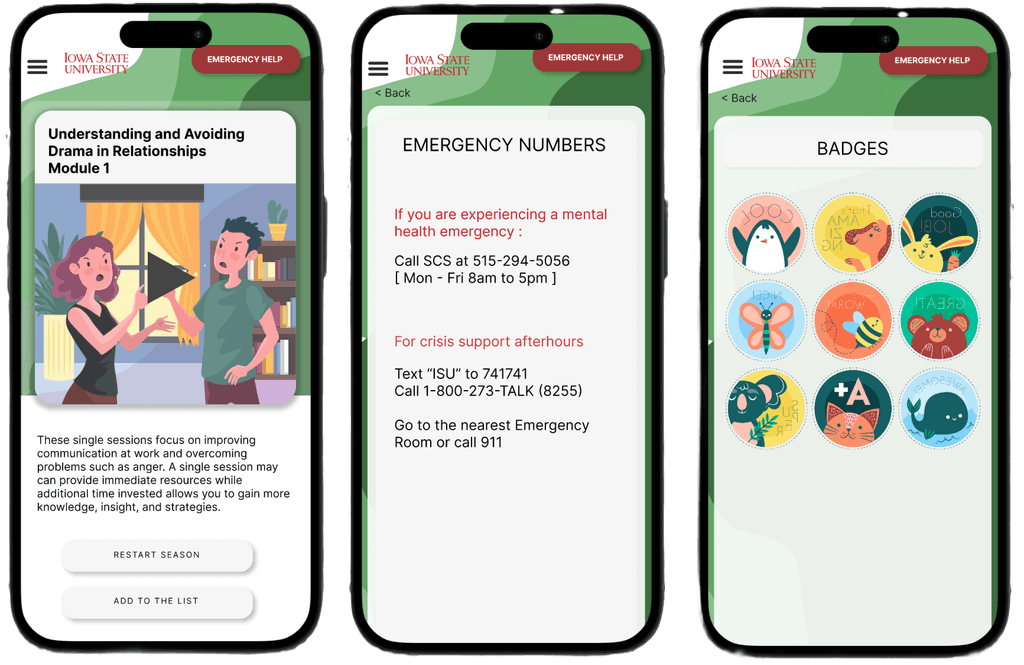
Prototype
Prototype

Key Results
Key Results
SUS score for the original app was 60.4 (D grade); redesigned app showed significant improvement in usability.
Redesign addressed critical pain points:
Simplified navigation.
Clearer layouts and better task categorization.
Enhanced visual appeal with improved themes and interactive elements.
SUS score for the original app was 60.4 (D grade); redesigned app showed significant improvement in usability.
Redesign addressed critical pain points:
Simplified navigation.
Clearer layouts and better task categorization.
Enhanced visual appeal with improved themes and interactive elements.
Limitations
Limitations
• Small participant sample size.
Limited redesign scope due to time constraints.
Further testing required for features beyond core tasks.
• Small participant sample size.
Limited redesign scope due to time constraints.
Further testing required for features beyond core tasks.
Future Directions
Future Directions
• Refine prototypes for smoother interactions.
Expand usability testing to include broader demographics and app features.
Conduct comparative studies to assess long-term user engagement and adherence.
• Refine prototypes for smoother interactions.
Expand usability testing to include broader demographics and app features.
Conduct comparative studies to assess long-term user engagement and adherence.